





LANDSCAPE LIGHTING GUIDE
What areas of a property should be lit first?
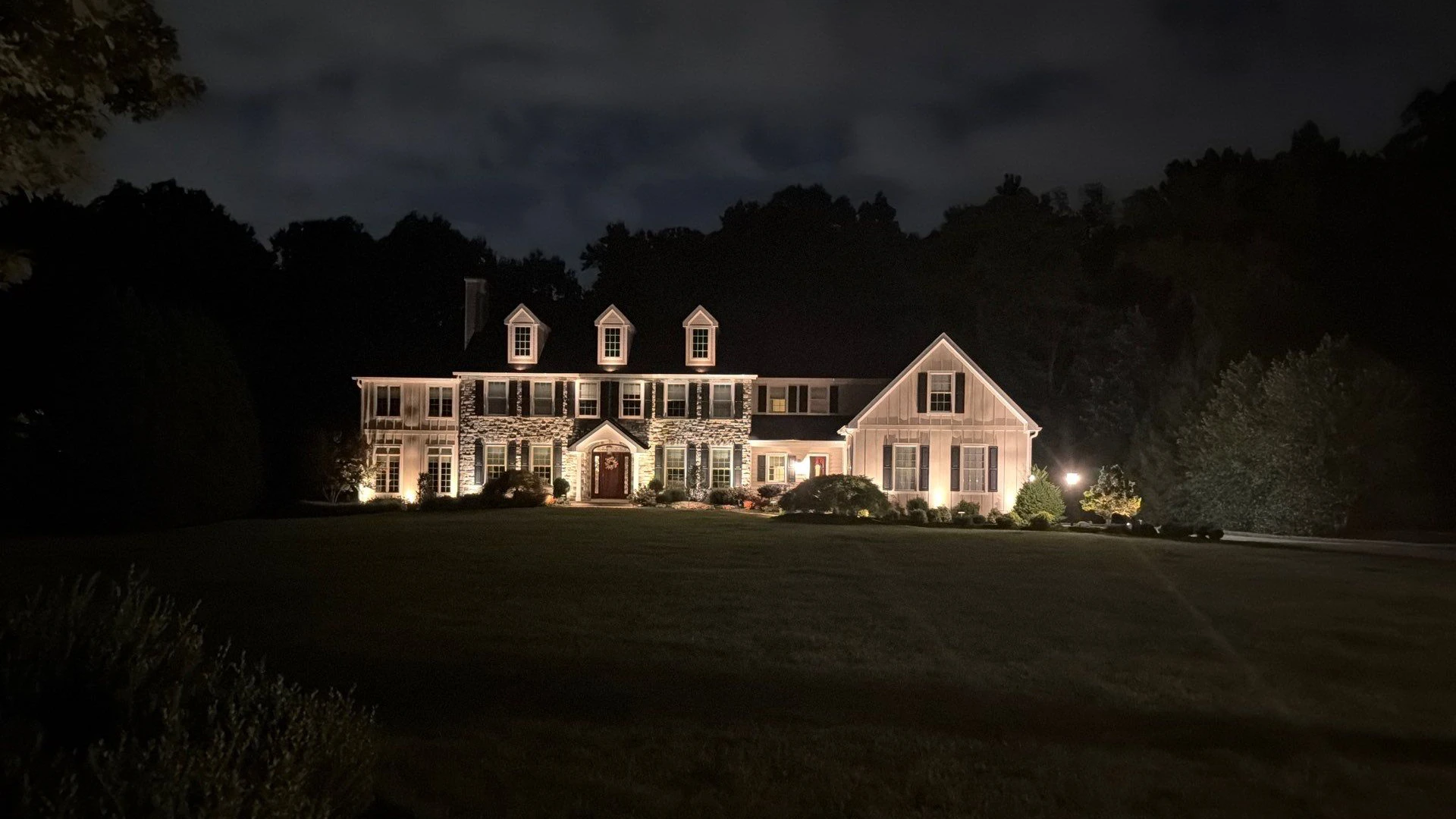
For most homes, the best place to start is the front entry and walkway. Those areas usually create the fastest improvement in arrival feel, curb appeal, and nighttime confidence.
START WITH IMPACT
Light the arrival experience first.
The front entry and path leading to it usually create the strongest first improvement because they combine function, safety, curb appeal, and atmosphere.
WHY THIS ORDER WORKS
Build the plan around how the property feels after dark.
A good lighting plan is not just a list of fixtures. It is a decision about where light will make the property feel more welcoming, easier to navigate, and more complete after dark.
-
1
Arrival
Help guests understand where to enter and make the front of the home feel intentional.
-
2
Movement
Make walkways and steps easier to read without creating harsh glare.
-
3
Focus
Highlight one or two strong architectural or landscape features.
FIRST-PHASE PRIORITIES
Start with the places that do the most work.
The best first phase is selective. It should solve the most visible and useful lighting needs before adding decorative coverage everywhere else.
- Front door and entry steps
- Main walkway or approach path
- Address marker or key architectural feature
- One strong tree, wall, or planting focal point
- Any transition that feels unsafe or visually unclear
THINK IN ZONES, NOT FIXTURES
The right starting areas depend on how the property is experienced.
-

Front entry
The entry is usually the most important first impression. Light should guide people in and help the home feel welcoming.
-

Walkways and steps
Paths should be readable and comfortable to use, with a soft rhythm rather than harsh glare.
-
Focal points
A mature tree, textured wall, specimen planting, or architectural feature can give the plan depth.
-
Patios and outdoor rooms
Move this area higher when the homeowner regularly entertains or relaxes outdoors after dark.
-
Driveway and arrival edges
Clarify the approach and frame the property without flooding the driveway with brightness.
-
Backyard transitions
Once the front works well, connect the home to the spaces people use through the evening.


WHAT NOT TO DO FIRST
More light is not automatically a better plan.
-
01
Do not light every edge at once
Blanket coverage can flatten the property. Start with the areas that need attention and let darker spaces create contrast.
-
02
Do not begin with decorative details alone
Garden accents should support the entry, movement, and main focal points rather than replace them.
-
03
Do not plan from the daytime view only
Lighting should be planned around nighttime sightlines, shadows, glare, and approach paths.
-
04
Do not assume every property needs the same sequence
A home with difficult steps may need safety addressed first. An entertaining-focused home may prioritize the patio.

PHASED PLANNING
A strong first phase leaves room for the next one.
A phased plan can create a meaningful improvement now while keeping future additions coordinated with the home and landscape.
- Phase 1 Entry, walkway, and one or two focal points
- Phase 2 Patio, outdoor living, and backyard transitions
- Phase 3 Additional architecture, planting, and property depth
A CLEAR PLACE TO START
Not sure where your property should start?
ScapeWorx can help identify the areas that will create the biggest difference first, then build a lighting plan around how you want to experience the property after dark.
COMMON QUESTIONS
Questions homeowners ask before starting.
What area should most homeowners light first?
For most homes, the front entry and walkway are the best starting points because they improve arrival, movement, curb appeal, and nighttime confidence together.
Should patio lighting come before walkway lighting?
Usually not, unless the patio is the part of the property being used the most. The entry and walkway affect how people arrive and move around the home every evening, so they normally come first. If the property is used for entertaining or relaxing outdoors after dark on a regular basis, the patio can reasonably move up the order.
Do I need to light the entire property?
No. A strong first phase is selective. Lighting every edge at once can flatten the property, and leaving some areas darker is what creates contrast. Most plans begin with the entry, walkway, and one or two focal points, then expand to outdoor living and backyard transitions later.
Can ScapeWorx help decide what to light first?
Yes. That is the purpose of a short Lighting Plan Call: a 10 to 15 minute conversation about the property, what you want to improve, and which areas will make the biggest difference first. From there we can talk through a sensible starting scope and, if it is a good fit, arrange the on-site consultation.